Minneapolis foreclosures — sheriff sales, redemption dates and vacancy
Minneapolis foreclosures are Hennepin County sheriff's sales for properties inside the city limits, and foreclosures Minneapolis-wide are the largest share of the county's total. This page is built from the Hennepin County sheriff sale list filtered to Minneapolis addresses, matched to parcel and recorder records, plus the city's own vacant building registry. The numbers are dated.
Minneapolis foreclosures right now#
Sheriff-sale figures as of September 16, 2026, last twelve months.
| Minneapolis sheriff's sales tracked | 407 |
| Share of all Hennepin County sheriff's sales | 42% (407 of 975) |
| Properties still in their redemption window | 233 |
| Redemption windows closing in the next 30 days | 50 |
| Sales with a county-stated redemption expiry date | all |
| Registered vacant buildings (city registry, last read) | 154 |
| Condemned buildings (city registry, last read) | 157 |
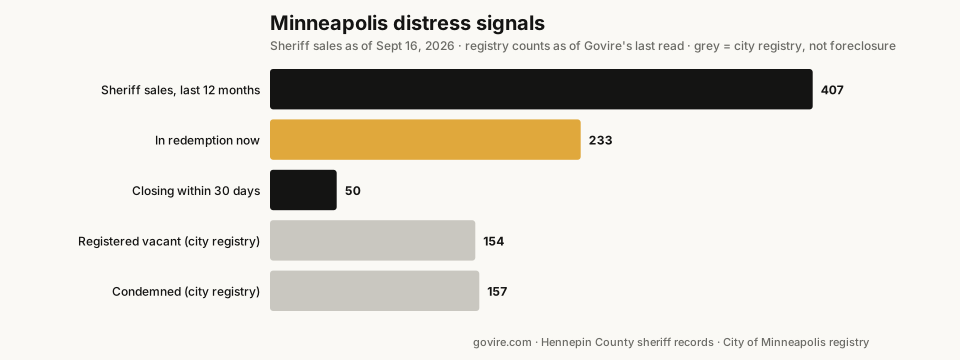
Two notes on those numbers. Minneapolis foreclosures share Hennepin's advantage: the county publishes the redemption expiry date in every sale record, so every deadline on this page and on Govire's list is the county's own figure, not a six-month estimate. And the vacant-building counts come from the city's registry as Govire last collected it; the city updates the registry on its own schedule, and the counts are labelled with their observation date on the property record rather than presented as live.
Foreclosed homes Minneapolis: the sheriff sale list#
The current Minneapolis foreclosure listings, covering the home foreclosures in Minneapolis MN the county has recorded, sale by sale with neighbourhood, sale date, opening bid, winning bid and the county's redemption expiry date, are at govire.com/data, filtered to Minneapolis. That list is the closest thing the city has to a single register of foreclosure homes Minneapolis buyers can act on, and it includes foreclosed houses Minneapolis agents will not see on the MLS because the property is still inside its redemption window and has not reached the market.
Minneapolis sheriff sale list by month#
| Month | Minneapolis sheriff's sales |
|---|---|
| Sep 2025 (from the 16th) | 14 |
| Oct 2025 | 20 |
| Nov 2025 | 23 |
| Dec 2025 | 43 |
| Jan 2026 | 44 |
| Feb 2026 | 29 |
| Mar 2026 | 32 |
| Apr 2026 | 55 |
| May 2026 | 26 |
| Jun 2026 | 49 |
| Jul 2026 | 42 |
| Aug 2026 | 25 |
| Sep 2026 (to the 16th) | 5 |
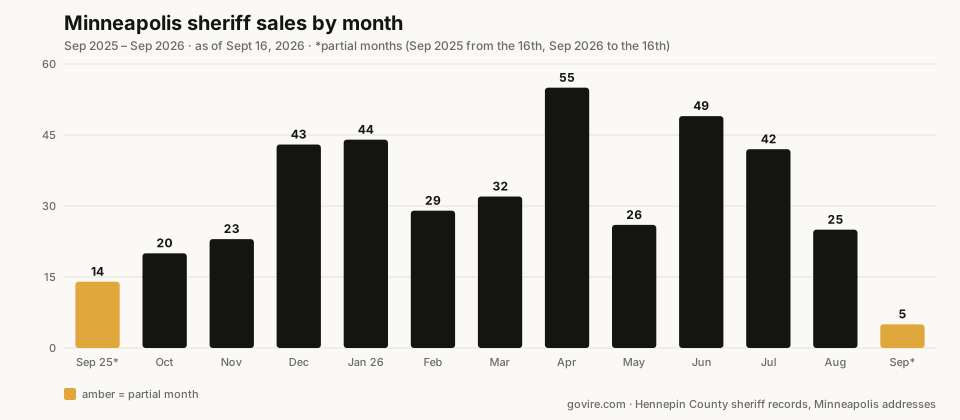
April was the heaviest month at 55 sales and October the lightest full month at 20. Minneapolis runs about 34 sheriff's sales a month and moves with the county: Hennepin as a whole runs 80 to 90, heaviest in spring and midsummer and lightest in the autumn, and the city is a steady two-fifths of it. The Hennepin County foreclosures page carries the county's month-by-month table for comparison.
Minneapolis vacant building registry and condemned properties#
This is where Minneapolis differs from every suburb around it. The city tracks vacant and condemned buildings through a vacant building registration program: when a building sits empty or is condemned, the city places it on the registry and charges the owner an annual fee of several thousand dollars to keep it there. The point is to push owners to repair or sell rather than let a building rot.
At Govire's last read of the registry, 154 buildings were registered vacant and 157 were condemned. Registered vacant buildings had been on the list an average of 4.2 years; condemned buildings, 6.0 years. Those are not short-term problems. A building six years into the condemned list has cost its owner tens of thousands of dollars in fees, and the fee, unpaid, becomes a special assessment on the tax bill, which is how a city fee for an empty building can end in tax forfeiture. The vacant building registration and condemned property glossary entries cover the mechanics.
For someone watching the Minneapolis distressed-property market, the registry is an early signal. A vacant or condemned building is not a foreclosure; the owner may be current on the mortgage. But vacancy usually points to an owner who is absent, overwhelmed or motivated, and a property that appears on both the sheriff sale list and the registry is the clearest distress signal the public record can give.
Are vacant properties Minneapolis lists the same as foreclosures?#
No, and the distinction matters. A foreclosure is a legal process triggered by an unpaid mortgage and ending at a sheriff's sale. A vacant building registration is a city designation triggered by a building sitting empty or being condemned, regardless of the mortgage. A property can be one, the other, both or neither. Govire tracks both because looking at either alone misses half the picture.
The redemption period after a Minneapolis sheriff sale#
Winning the bid does not hand you the keys. Minnesota Statute 580.23 gives the former owner a redemption period, six months by default, to pay the winning bid plus interest and costs and keep the house, and the owner usually keeps living there while the window is open. The period is twelve months when the amount owed at the time of the notice was less than two-thirds of the original mortgage, and five weeks when a court finds the property abandoned under Statute 582.032 or the owner postponed the sale under Statute 580.07.
Because Hennepin states the date in each record, a Minneapolis buyer or owner does not have to guess which rule applied. Read it off the certificate of sale, or off Govire, which reads it off the same record. The 233 open windows above are 233 Minneapolis homes whose ownership is not yet settled, and 50 of them settle within a month.
How Minneapolis owners fare after a sheriff sale#
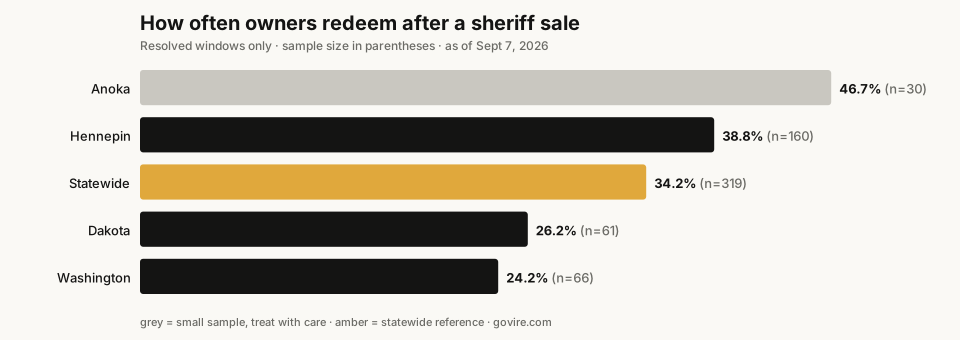
Across the 160 resolved Hennepin County windows Govire tracks, 38.8% ended with the owner redeeming, the highest rate among the large metro counties. Among the Minneapolis sales from the last twelve months that have already resolved, 11 ended in redemption and 18 in the certificate holder taking title; most of the year's windows are still open or awaiting the recorder, so a Minneapolis-only rate is not yet worth publishing. The Hennepin figure, and its finding that owners redeem far more often when the winning bid was low relative to the home's value, is on the Hennepin County page.
How city of Minneapolis foreclosures work#
Minneapolis does not run its own foreclosure system. Foreclosures inside the city follow Minnesota law and are processed by Hennepin County. Nearly all are by advertisement: the lender does not sue; its law firm publishes a notice of the sale in a qualified newspaper once a week for six weeks, serves the occupants, and the property is sold at a public auction run by the Hennepin County Sheriff's Office. The full step-by-step is in the Minnesota foreclosure timeline.
What to know before a Minneapolis foreclosure auction#
- Payment is immediate. The winning bidder pays in full, in certified funds, at the sale. There is no financing afterward.
- You usually cannot inspect first. Properties are sold as-is on the information in the notice.
- You are buying a certificate, not a house. It becomes a deed only if the owner does not redeem, and in Hennepin roughly four in ten do.
- Check the vacant building registry. A Minneapolis property on the registry carries an annual fee and possibly a special assessment that survive the sale.
- Read the expiry date on the certificate. Hennepin prints it.
Minneapolis foreclosure records: where the data comes from#
The sales on this page come from the Hennepin County Sheriff's Office foreclosure sale records, filtered to Minneapolis addresses and matched to Hennepin County parcel records. The vacant and condemned counts come from the City of Minneapolis vacant building registration program, collected on a schedule and dated. Redemption outcomes come from the county recorder. Where Govire estimates rather than reads a figure, the page and the underlying record say so. Govire does not buy properties, is not anyone's agent, and takes no part in any sale.
See current Minneapolis foreclosures and vacant buildings →
Related guides: