Tax forfeited land MN — parcels about to forfeit, county lists, how to buy
Tax forfeited land MN buyers are looking for is property whose title has passed to the state after years of unpaid property taxes, and the searchers are in the wrong place if they expect a statewide list, because Minnesota keeps it county by county. This page is built from the county delinquent-tax lists, expiration-of-redemption notices and forfeited-land inventories Govire collects, and the numbers on it are dated.
Minnesota tax forfeited land right now#
Figures as of September 16, 2026.
| Parcels in the final redemption window before forfeiture (13 counties) | 335 |
| Hennepin County parcels on the delinquent tax list, still open | 3,113 of 4,114 tracked |
| Hennepin County parcels already forfeited to the state | 185 (180 still held) |
| Ramsey County forfeited parcels listed for auction | 34 |
| Ramsey County parcels carrying a special-assessment burden | 483 |
| Olmsted County parcels on the delinquent tax list | 502 |
Those are three different stages of the same process, and the page keeps them apart because searchers usually don't. A parcel on a delinquent list is years from sale. A parcel in the expiration-of-redemption window is months from forfeiture. A parcel on a county auction list is state-owned and for sale now.
State of MN tax forfeited land by county: parcels about to forfeit#
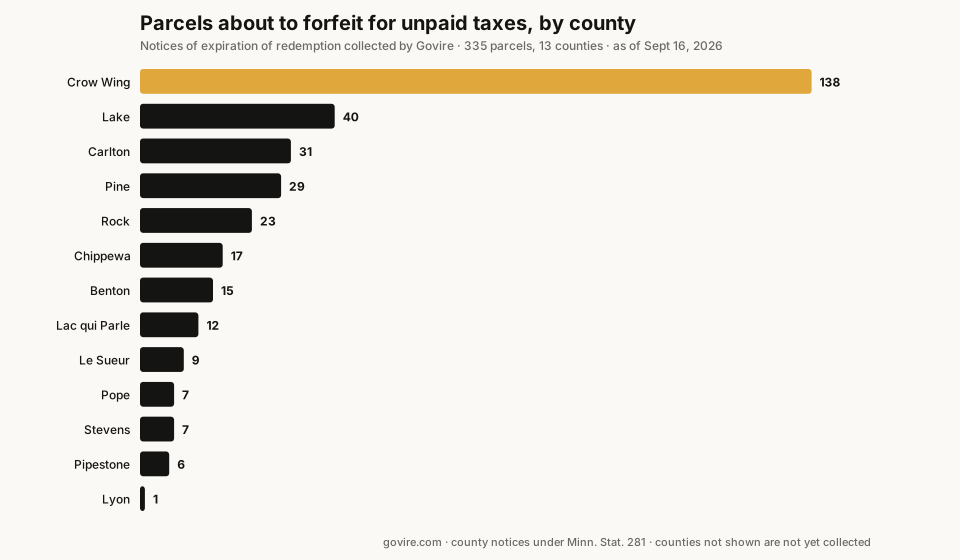
Before a parcel forfeits, the county publishes a notice that the three-year redemption period is expiring. Govire collects those notices. As of September 16, 2026, they cover 335 parcels:
| County | Parcels with an expiring redemption period |
|---|---|
| Crow Wing | 138 |
| Lake | 40 |
| Carlton | 31 |
| Pine | 29 |
| Rock | 23 |
| Chippewa | 17 |
| Benton | 15 |
| Lac qui Parle | 12 |
| Le Sueur | 9 |
| Pope | 7 |
| Stevens | 7 |
| Pipestone | 6 |
| Lyon | 1 |
Crow Wing, Lake, Carlton and Pine are lake and cabin country, and that is not a coincidence: recreational lots with no mortgage and an absent owner are the parcels most likely to slide into forfeiture unnoticed. If you have been searching for tax forfeited land Pine County MN or the Crow Wing County list, those 29 and 138 parcels are the pipeline, not the inventory; they become tax forfeited land for sale MN counties list only after the window closes and the county schedules a sale.
Counties not in the table are counties whose notices Govire has not yet collected, not counties with nothing forfeiting. St. Louis, Cass, Itasca and Stearns, four of the most-searched, are on the list to add.
Hennepin County: the delinquent tax list and the forfeited inventory#
Hennepin is the one county where Govire has the whole chain, from delinquent list to tax forfeited property MN counties eventually auction. Of 4,114 parcels Govire has tracked on the Hennepin delinquent property tax list, 3,113 are still delinquent and 1,001 have come off the list, mostly paid. That 24% resolution rate is the number the delinquent list is usually missing: most delinquent parcels never forfeit, because the owner pays, often years in. At the other end of the chain, 185 Hennepin parcels have forfeited to the state and 180 are still held for sale. The Hennepin County tax forfeited land page carries the parcel-level detail.
Ramsey County publishes its forfeited inventory as an auction list, currently 34 parcels, and separately flags 483 parcels carrying special-assessment burdens, the unpaid city charges that get certified to the tax bill and are one of the quieter routes into delinquency. Olmsted County publishes a delinquent list of 502 parcels, covering the Rochester area.
The Minnesota tax forfeiture process, and how long each step takes#
Minnesota is deliberately slow here. The owner gets years and several chances before the property is lost.
- Taxes go delinquent. Unpaid property tax becomes delinquent the following January and begins accruing penalty and interest. The county publishes the delinquent tax list under Minnesota Statute 279.
- Tax judgment. The county takes the delinquent taxes to district court and a judgment is entered against the parcel. This starts the redemption clock.
- Redemption period, three years for most property. Under Statute 281.17 the owner can pay everything owed, or enter a confession-of-judgment payment plan, and keep the parcel. Homestead and some agricultural property get five years.
- Notice of expiration of redemption. Before the period ends the county serves and publishes a notice. This is the stage the 335 parcels above are in.
- Forfeiture. If nothing is paid, absolute title passes to the State of Minnesota.
- County sale. Under Statute 282 the county classifies the parcel, appraises it and offers it for sale, usually at public auction, with unsold parcels available afterward.
The distinction that matters for a buyer: property tax forfeiture Minnesota-style is slow, so a parcel that is merely delinquent today is potentially three to five years from sale.
How to buy tax forfeited land in Minnesota#
Once a parcel has forfeited, the county that holds it sells it under Statute 282 to get it back on the tax rolls; that is where MN tax forfeited land for sale actually comes from, and state of Minnesota tax forfeited land is always sold by a county, never by the state directly. Formats vary: periodic public auctions, over-the-counter sales of parcels that did not sell, and in some counties an online auction provider. The steps are the same everywhere:
- Get the county's list. Each county auditor or land department publishes its available forfeited parcels. Ramsey's current list is 34 parcels; Hennepin holds 180.
- Research the parcel, not the price. Access, zoning, wetlands, easements, whether it is landlocked, and any conditions the county attaches to the sale. Forfeited inventory skews toward odd lots for a reason.
- Check what survives the sale. Forfeiture wipes most liens, but special assessments may be reinstated and some easements always survive.
- Follow the county's process. In-person auction, sealed bid, online, or direct purchase, each with its own deposit and deadline rules. Confirm the current rules with the county before relying on anything on this page.
Tyler v. Hennepin County and the 2024 surplus law#
In 2023 the U.S. Supreme Court held in Tyler v. Hennepin County that when Hennepin County kept the full sale proceeds of a forfeited condominium worth far more than the $15,000 tax debt, it had taken property without just compensation. Minnesota rewrote its forfeiture statutes in 2024 so that a former owner is now entitled to the surplus when a forfeited parcel sells for more than what was owed, and a $109 million settlement, given final approval in Ramsey County District Court in December 2024, covered owners whose property forfeited under the old rules.
For a former owner, this means forfeiture no longer erases equity, and a claim process exists. For a buyer, it means counties now appraise and sell forfeited parcels with the surplus in mind, and the days of forfeited land going for the tax debt alone are largely over. If you have been searching for the Minnesota tax forfeiture settlement, the claim runs through the state, not through any private party; be wary of anyone offering to recover a surplus for a fee.
Tax forfeiture is not foreclosure#
They get confused constantly. A foreclosure is a dispute between an owner and a lender over an unpaid mortgage; it ends at a sheriff's sale and carries a six-month redemption period. Tax forfeiture is between an owner and the county over unpaid taxes; it ends in title passing to the state and carries a three-year redemption period. A parcel can be in both processes at once, and when Govire sees a parcel on a delinquent list and a sheriff sale list together, that is the strongest distress signal the public record offers.
Minnesota tax forfeited land records: where the data comes from#
The figures on this page come from county delinquent tax lists published under Chapter 279, county notices of expiration of redemption, and county forfeited-land inventories, collected on a schedule and matched to parcel records. Where a county is not shown, Govire has not yet collected its notices. Where Govire estimates rather than reads a figure, the page and the underlying record say so. Govire does not buy properties, does not recover surpluses, is not anyone's agent, and takes no part in any sale.
See current Minnesota delinquent and tax-forfeited parcels →
Related guides: