Probate homes for sale: how an estate's house reaches the market
Probate homes for sale are the quietest inventory in residential real estate. Nobody advertises them as such; the seller is an estate, the listing agent is whoever the family hired, and the fact that the house came through probate is visible only in the deed. But probate is a court filing, filings are public, and an estate that holds a house has a decision to make within months. That is what makes probate a distress signal rather than a sad footnote: a deadline, a motivated fiduciary, and a public record that says so.
This page explains who can sell an estate's house and when, what the sale records show about price and speed, and how the filings become a list. The Minnesota figures come from state sale filings matched to county distress records and from probate filings Govire reads directly from two counties.
What a probate home for sale actually is#
When someone dies owning a house in their own name, the house does not belong to the heirs the next day. It belongs to the estate, and the estate cannot act until a court appoints a personal representative — the executor named in the will, or an administrator if there is none. In Minnesota that appointment comes through informal probate, a registrar's process that takes weeks, or formal probate before a judge where there is a dispute or a defective will.
Once appointed, the representative holds the power to sell. Minnesota follows the Uniform Probate Code, and under Minn. Stat. 524.3-715 a representative in unsupervised administration may sell real estate without a court order, on the same terms any owner could. Supervised administration, which a court imposes in contested estates, requires the court's approval of the sale. Either way the house reaches the market through an ordinary listing, an ordinary purchase agreement, and an ordinary closing — with the estate as seller and the proceeds held for creditors and heirs.
Two things follow. A probate filing does not mean a house will be sold; many estates pass the house to an heir who keeps it. And a house that passes outside probate — by transfer on death deed, joint tenancy or trust — never generates the filing at all.
What estate sales sell for, and how fast#
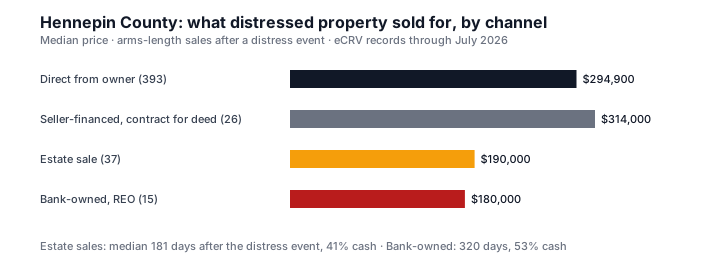
Govire matched roughly two and a half years of Minnesota's eCRV sale filings, through July 2026, against county distress records. In Hennepin County, where the sample is largest, estate sales are the second-largest channel by which distressed property changes hands and the second-cheapest:
| Channel | Sales | Median price | Cash buyers | Median days from distress event |
|---|---|---|---|---|
| Direct from owner | 393 | $294,900 | 38% | 209 |
| Estate sale | 37 | $190,000 | 41% | 181 |
| Contract for deed | 26 | $314,000 | 4% | 173 |
| Bank-owned (REO) | 15 | $180,000 | 53% | 320 |
Statewide, across all arms-length sales in the same filings, 7,680 estate sales closed at a median of $237,500 against $340,000 for standard sales — 30% below — with 40% paying cash.
The pattern is consistent: estate sales close faster than any channel but seller financing, at a discount of roughly a third, to buyers who mostly finance. Heirs are selling a house that has usually been lived in for decades, is priced to clear rather than to maximise, and comes with the one thing distressed property rarely has — a seller with authority and clean title.
Where probate homes come from: the filing#
A probate case is filed in the district court of the county where the decedent lived. The filing names the decedent, the representative and the attorney; the notice to creditors is published under Minn. Stat. 524.3-801, which is how the estate becomes public. What the filing does not say is whether the decedent owned real estate, which is why matching the decedent's name to the parcel record is the work.
Govire reads probate filings from two counties today and matches each to a parcel:
As of September 18, 2026.
| County | Filings | Period | Matched to a parcel | Median assessed value |
|---|---|---|---|---|
| Fillmore | 48 | July 2025 – April 2026 | 48 of 48 | $214,950 |
| Olmsted | 20 | June – September 2026 | 20 of 20 | $324,500 |
Sixty-eight filings, every one tied to a house. That is two of 87 counties; a statewide extract of formal and informal probate filings from the Minnesota court system is in progress, and this page will carry the count when it lands.
Probate homes vs foreclosures: why the estate is the easier seller#
A foreclosure sale in Minnesota produces a certificate the buyer may hold for a year while the former owner decides whether to redeem; 34.2% of 319 tracked windows ended with the owner doing exactly that. A bank-owned resale arrives 320 days after the distress event, sold as-is to a room that is half cash. An estate sale has neither problem. The personal representative has authority the day the letters issue, the title is clean because the estate is conveying it, and the buyer can finance, inspect and close on ordinary terms. The discount is smaller than a courthouse auction's and the certainty is far greater, which is why the 37 Hennepin estate sales closed faster than any channel except seller financing.
Reading a probate filing as a buyer#
The date matters more than the name. A filing from last month has a representative who is just getting letters; a filing from six months ago has one who has cleared creditors and is deciding what to do with the house. Estate sales in the Hennepin data close at a median of 181 days from the distress event.
Look for the representative, not the heirs. The representative holds the authority; contact through the estate's attorney of record is the route that respects both the law and the family.
Check for a transfer on death deed. If one was recorded, the house has already passed and the probate filing does not cover it.
Expect a long-held house. Deferred maintenance is the norm, and the discount reflects it. Inspect; financing usually works.
What this page does not show#
A list of houses. Filings are matched to parcels on Govire's data view, with the filing date and the parcel record. This page publishes counts and medians.
Anyone's name. Probate filings carry the decedent's and representative's names as public record; Govire does not republish them on public pages.
Eighty-five counties. Two are read today. The statewide feed changes that, and the page will say when.
See current probate filings#
For how the other channels work, see buying foreclosed homes in Minnesota and how to find distressed properties.