Rochester MN foreclosures — Olmsted County sheriff sales and tax list
Rochester MN foreclosures are Olmsted County sheriff's sales for properties inside the city, and Rochester is most of Olmsted County by population, so the county figures on this page are, in practice, Rochester figures. This page is built from the Olmsted County sheriff's sale notices and the Olmsted County delinquent property tax list as Govire collects them, matched to parcel records. The numbers are dated, and one of them is new enough to need a caveat.
Rochester and Olmsted County distress right now#
Figures as of September 16, 2026.
| Olmsted County sheriff's sales tracked (since July 2026) | 7 |
| Still in their redemption window | 7 |
| Parcels on the Olmsted County delinquent tax list | 502 |
| Paid since listed | 270 (54%) |
| Homestead parcels on the list | 190 (38%) |
| Average amount owed per delinquent parcel | about $1,958 |
| Total delinquent tax tracked | about $983,000 |
The sheriff-sale line needs to be read for what it is. Govire started collecting Olmsted County sheriff's sales from statutory notices in July 2026; the seven above are what has been published since, and every one is still inside its window. That is a coverage start. Olmsted County does not foreclose seven properties a year; it forecloses seven properties in a slow summer month, and the twelve-month count will build as the feed runs. Until then, anyone quoting an annual Rochester foreclosure number from this page is quoting a number that does not exist yet.
The delinquent-tax lines need no caveat. That is the full county list.
Rochester MN foreclosures: the sheriff sale list#
The current Olmsted County foreclosure listings, with sale date, opening bid, and estimated redemption expiry, are at govire.com/data, filtered to Olmsted County. The foreclosure homes Rochester MN buyers are searching for, and the foreclosed homes Rochester MN investors track, appear there when the county publishes the notice, six weeks before the sale, and stay listed through the redemption window, which is when they are still off the market and still redeemable.
Olmsted County does not publish a machine-readable sheriff-sale list. Govire's Olmsted sales come from the foreclosure notices lenders must publish under Minnesota Statute 580 before a sale, which is the same source a search for Olmsted County foreclosure records leads to. Those notices state the sale date and the amount due; they do not state the redemption period, so every Olmsted expiry date Govire shows is computed at the six-month statutory default and labelled as an estimate.
The Olmsted County delinquent tax list: what 502 parcels say#
Tax delinquency is the earlier, slower distress signal, and for Olmsted it is the one Govire has in full. 502 parcels appear on the county's delinquent property tax list. Three things stand out.
Most of it gets paid. Since the parcels were listed, 270 of the 502, or 54%, have been paid. The delinquent list is not a list of properties about to be lost; it is a list of owners who missed a payment, most of whom catch up. Anyone using a delinquent list as a lead list is mostly contacting people who have already fixed the problem.
The amounts are small. The average parcel owes about $1,958, and the total across all 502 is about $983,000. These are one or two years of missed payments on ordinary homes, not the multi-year arrears that end in forfeiture.
A third are homesteads. 190 of the 502 are homestead properties, meaning the owner lives there. Under Minnesota Statute 281.17 a homestead gets a longer redemption period after a tax judgment than other property, so those 190 have more time than the rest of the list.
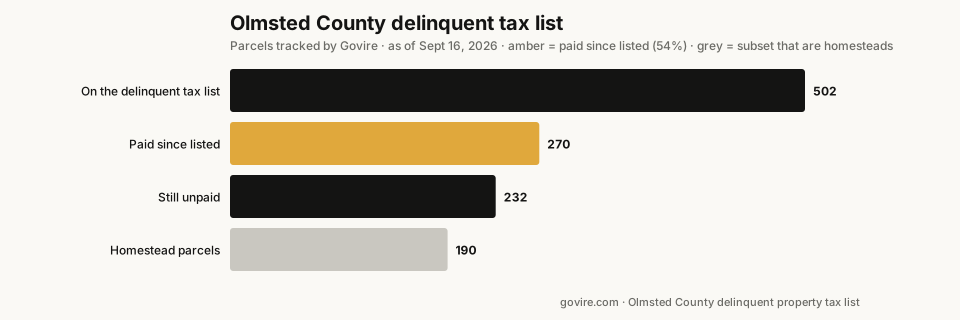
For a Rochester owner who has found their own parcel on this list: it is not a foreclosure, the county will accept payment, and payment plans exist. For a buyer: the 232 parcels still unpaid are years from any sale, and most of them will never reach one.
How Rochester and Olmsted County foreclosures work#
Nearly every Olmsted County foreclosure happens by advertisement. The lender does not sue. Its law firm publishes a notice of the sale in a qualified newspaper once a week for six weeks, serves the occupants, and the property is sold at a public auction run by the Olmsted County Sheriff's Office. Because it skips the courts, the process is fast; a property can go from first missed payment to sheriff's sale in a few months. The stages, with how long each takes, are in the Minnesota foreclosure timeline.
Foreclosure by action, an actual lawsuit, is the rare path, used mostly where title is disputed. In a by-action case the redemption clock starts at the court's confirmation of the sale, not the auction date.
The redemption period after an Olmsted County sheriff sale#
Winning the bid does not hand you the keys. Minnesota Statute 580.23 gives the former owner a redemption period, six months by default, to pay the winning bid plus interest and costs and keep the house, and the owner usually keeps living there while the window is open. The period is twelve months when the amount owed at the time of the notice was less than two-thirds of the original mortgage, or when the property is agricultural and over ten acres, which matters in the townships around Rochester. It is five weeks when a court finds the property abandoned under Statute 582.032, or when the owner postponed the sale under Statute 580.07.
Because Olmsted's notices do not state the period, Govire's date is the six-month default until a source says otherwise. If a deadline matters to you, the certificate of sale at the Olmsted County Sheriff's Office is the place to confirm it.
What to know before bidding at a Rochester MN foreclosure auction#
- Payment is immediate. The winning bidder pays in full, in certified funds, at the sale. There is no financing afterward.
- You usually cannot inspect first. Properties are sold as-is on the information in the notice.
- You are buying a certificate, not a house. It becomes a deed only if the owner does not redeem. Across the Minnesota windows Govire has resolved, about a third of owners do.
- Other liens can survive. The sale clears the foreclosing mortgage. Property taxes, and in some cases other liens, do not. In Olmsted, check the delinquent tax list.
- Confirm the redemption date at the Sheriff's Office. The notice does not state it.
Rochester MN foreclosure records: where the data comes from#
The sheriff's sales on this page come from foreclosure notices published under Chapter 580 for Olmsted County, collected on a schedule and matched to Olmsted County parcel records. The delinquent-tax figures come from the Olmsted County delinquent property tax list published under Chapter 279. Where Govire estimates rather than reads a figure, the page and the underlying record say so. Govire does not buy properties, is not anyone's agent, and takes no part in any sale.
See current Olmsted County foreclosures and delinquent parcels →
Related guides: